
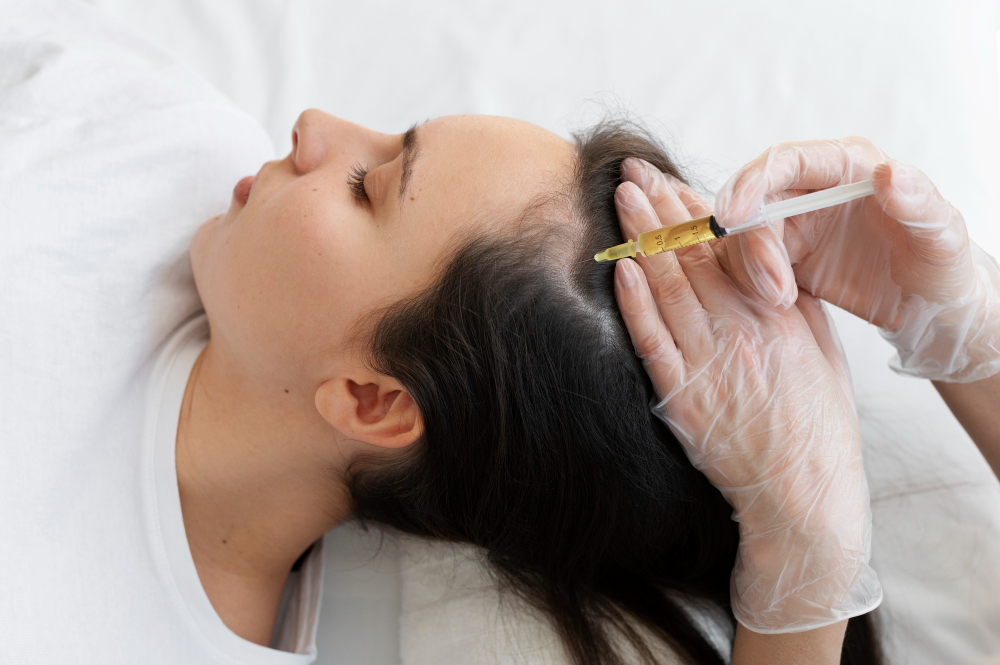
What is PRP for Hair?
PRP for hair is a treatment that uses your own blood to help with hair loss. PRP stands for Platelet-Rich Plasma. Doctors use it to help people with thinning hair or bald spots. Many people choose PRP hair treatment because it is natural and safe. In fact, PRP therapy for hair regrowth is becoming more popular every year.
How Does PRP for Hair Work?
First, doctors draw a small amount of your blood. Then, they spin it in a machine to separate the plasma. This plasma is rich in platelets, which help heal and grow tissue. Next, the doctor injects the PRP into your scalp. As a result, the platelets help wake up hair roots and support new hair growth. According to studies, PRP hair treatment can improve hair thickness and strength.
Benefits of PRP for Hair
There are many reasons people choose PRP for hair loss. Some of the main benefits include:
Moreover, PRP therapy for hair regrowth is safe for most people. Many find it less invasive than surgery.
Who is a Good Candidate?
Not everyone is the right fit for PRP hair treatment. However, you may be a good candidate if:
Still, it is important to talk with a dermatologist before starting PRP for hair. They can check if this treatment is right for you.
The PRP Procedure Step-by-Step
Knowing what to expect can help you feel at ease. Here is a simple step-by-step guide:
After the procedure, you can usually go home right away.
Expected Results and Timeline
Results from PRP for hair take time. Most people need three to four sessions, spaced about a month apart. After the first treatment, you may notice less hair shedding. Over the next few months, hair may look thicker and fuller. For best results, doctors often suggest follow-up treatments every six months. According to dermatology journals, many people see visible changes within three to six months.
Possible Side Effects and Risks
PRP hair treatment is safe for most people. Still, some side effects can happen. These may include:
Serious risks are rare, but infection or injury can occur. Therefore, always choose a trained doctor for PRP therapy for hair regrowth.
Aftercare and Lifestyle Tips
After PRP for hair, caring for your scalp is important. Here are some helpful tips:
Additionally, eating a healthy diet and managing stress can support hair growth.
Prevention and Maintenance Advice
To keep your hair healthy after PRP hair treatment, try these steps:
Furthermore, keeping up with follow-up PRP sessions can help maintain your results.
In summary, PRP for hair is a safe and natural way to treat hair loss. If you want to know if PRP hair treatment is right for you, consult a dermatologist at Dr. Reshe Clinics for personalized advice.